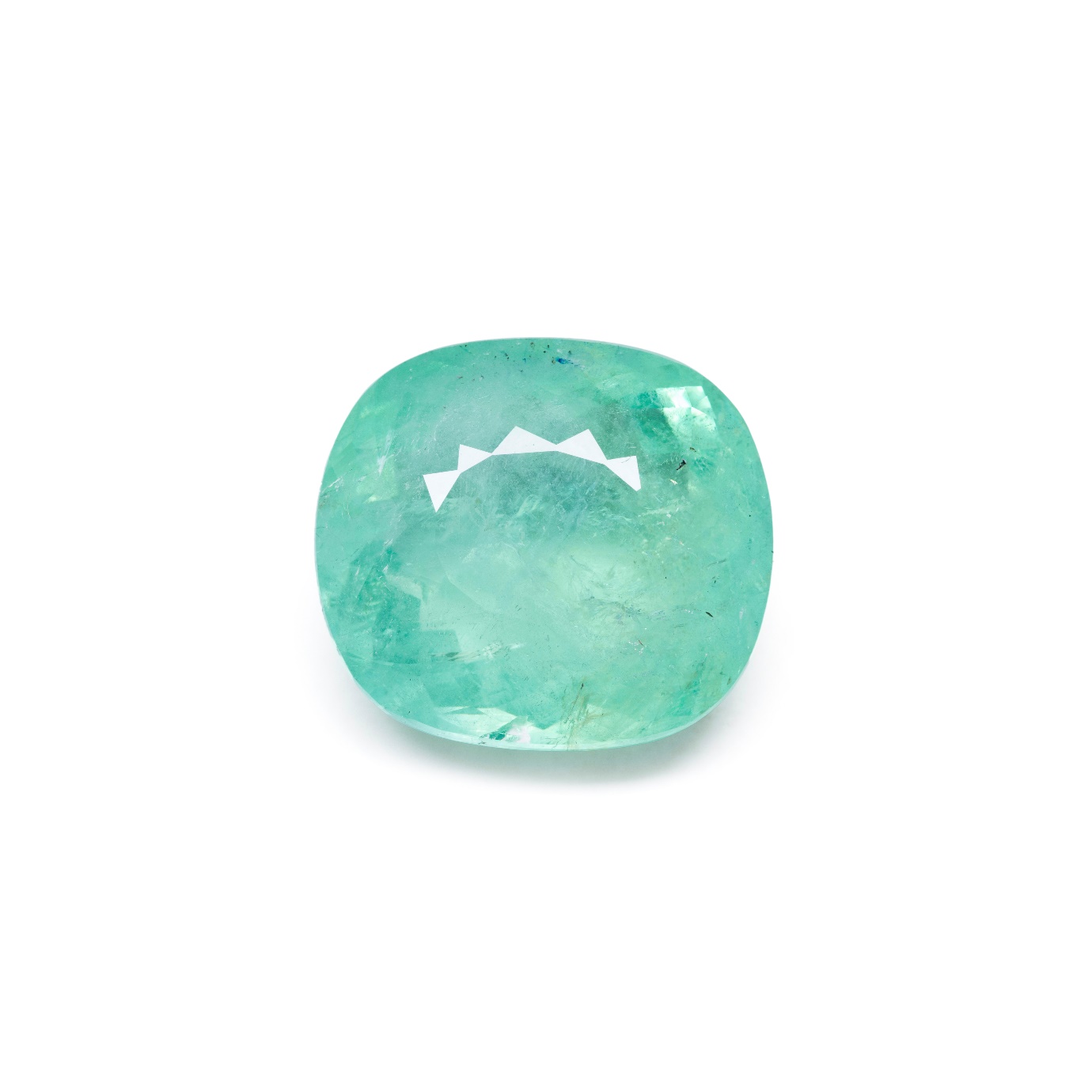
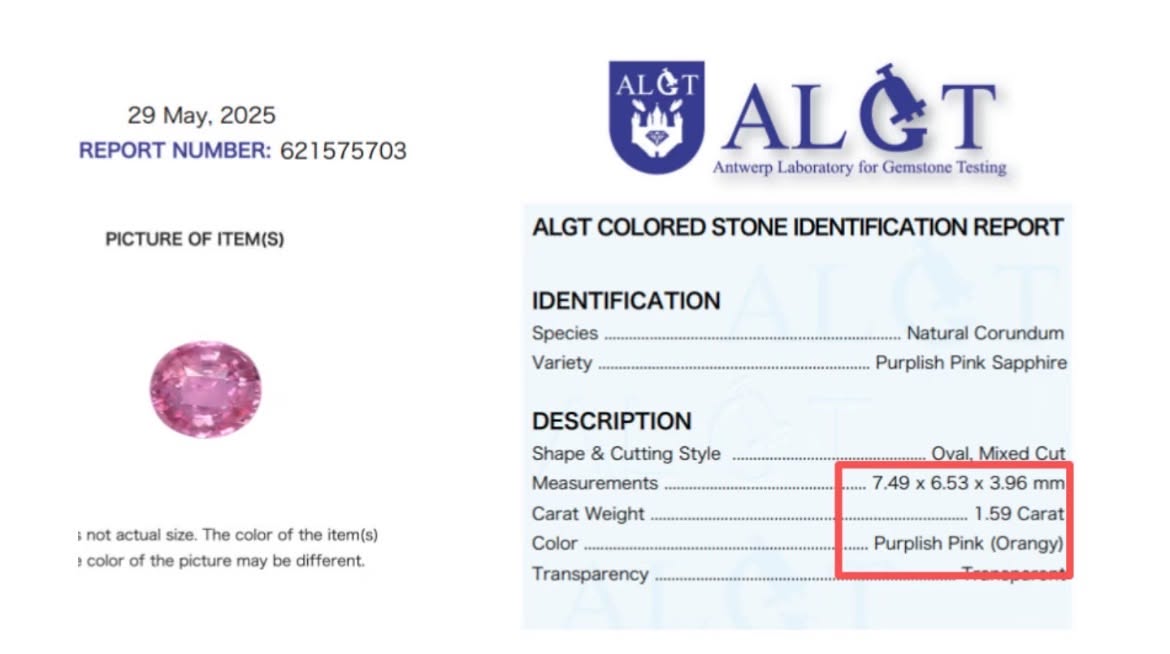
Two orangy-pink sapphires were submitted to ALGT for examination: a 1.08 ct heart-shaped stone and a 1.01 ct cushion-shaped stone. Their similar colour raised a question for the laboratory: would both qualify for the designation “Padparadscha sapphire”?
Utilizing Fourier Transform Infrared Spectroscopy (FTIR), our analysis revealed a distinctive absorption peak around 3160 cm⁻¹, a well-known indicator of unheated corundum. This confirms that both stones are unheated natural corundum. Given their captivating orangy-pink hue, we are now proceeding with further analysis to determine whether these gems meet the criteria to be classified as Padparadscha sapphires.
Colour Stability Testing
According to the LMHC Information Sheet #4, certain conditions must be met for a sapphire to be designated as a Padparadscha sapphire. To ensure compliance with these criteria, we began by assessing the color stability of the two stones. After exposing them to white light for one hour, no significant color change was observed in either stone. This indicates that their colors are stable, with no visible fading detected.
Microscopic Examination and Report Designation
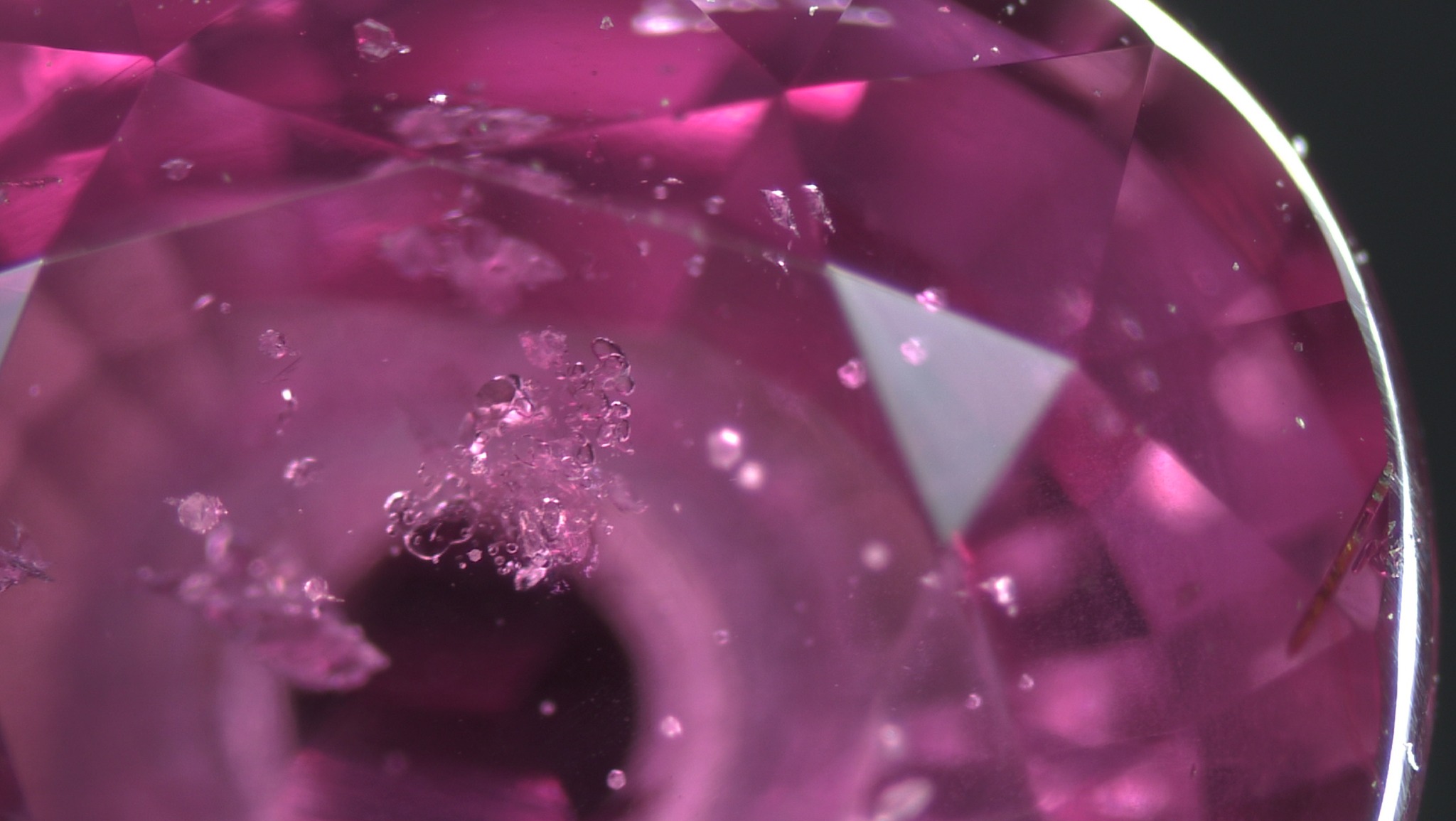
Next, we conducted a microscopic examination of inclusions. In the heart-shaped sapphire, we observed yellow or orange epigenetic material within fissures, which appears to contribute to its orangy-pink hue. In contrast, the cushion-shaped sapphire displayed a more even color distribution, free from such inclusions.
Based on these findings, we have concluded that the cushion-shaped sapphire meets the criteria for the trade name “Padparadscha sapphire,” while the heart-shaped sapphire will be described as an “orangy-pink sapphire.”
Case Summary
This case illustrates why two sapphires of similar apparent colour can receive different report descriptions. Colour stability testing formed part of the assessment for both stones. The distinction came from microscopy, which revealed secondary material in the heart-shaped sapphire’s fissures that may contribute to its observed colour.
Figures
Click any image to enlarge